

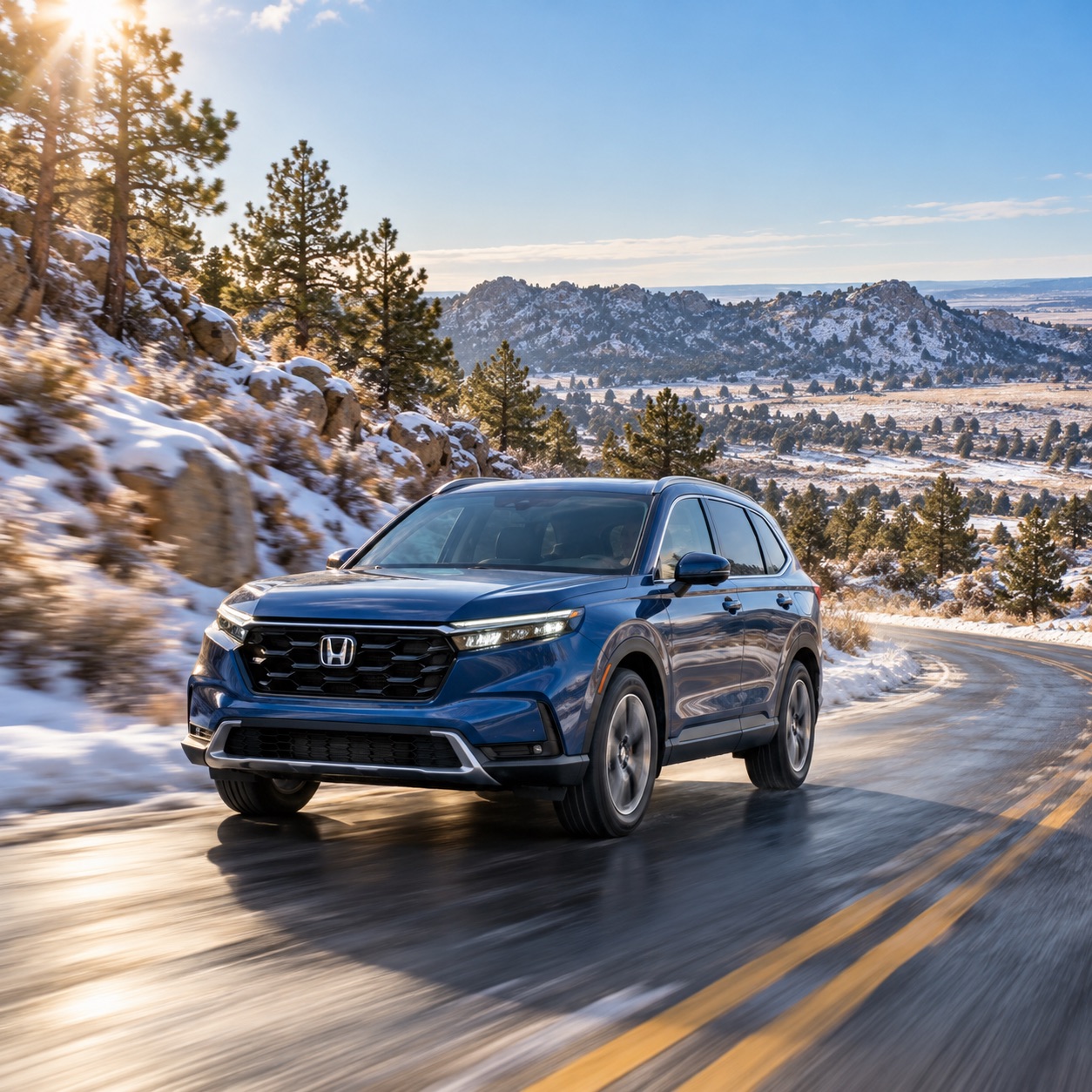
Fisher Auto Service Center | Winter Tire Guide
Winter Tires vs. All-Season Tires for Colorado Drivers
An ordinary drive across Boulder and a snowy climb into the mountains ask very different things of your tires. We help you compare winter, all-weather, and all-season options based on where you go, how often you drive in snow, and the vehicle you own.
Quick Answer: Winter Tires or All-Season Tires?
Choose dedicated winter tires for frequent snow, icy roads, and mountain travel. Choose severe-snow-rated all-weather tires for a stronger year-round compromise. Conventional all-season tires work best when your winter driving stays mostly on cleared roads and you can avoid storms. AWD does not replace winter grip, and Colorado’s traction laws have separate requirements.
Compare Your Options
Winter vs. All-Season vs. All-Weather Tires
The real difference goes beyond tread appearance. Rubber compounds, winter traction, warm-weather performance, and seasonal changeovers all affect which tires make the most sense for your vehicle.
| What Matters | All-Season | All-Weather | Winter |
|---|---|---|---|
| Snow and Slush | Light winter conditions; varies by model | Stronger snow traction without a seasonal swap | Purpose-built for sustained winter conditions |
| Ice and Cold Pavement | Typically the least winter-focused | An improved compromise; ice grip varies | Generally the strongest category, especially ice-focused models |
| Summer Driving | Designed for year-round operation | Not intended for prolonged warm-weather use | |
| Common Sidewall Marking | Often M+S; check the specific tire | Usually three-peak mountain snowflake (3PMSF) | Typically 3PMSF |
| Seasonal Changes | One-set convenience | Switch to warm-weather tires in spring | |
A severe-snow rating measures snow-traction performance. It does not guarantee superior ice grip or compliance with every active Colorado restriction.
Traction vs. Drivetrain
AWD Gets You Moving. Tires Determine How Well You Stop and Turn.
AWD and 4WD distribute power to help your vehicle accelerate when the road is slippery. They do not create extra grip when you need to brake or steer around a hazard. That distinction matters in an AWD Honda CR-V, Acura RDX, or any vehicle approaching an icy intersection.
Winter tires benefit front-wheel-drive vehicles, too. The proper seasonal setup uses four matching tires to maintain balanced steering and braking grip rather than fitting only the drive wheels.
We recommend choosing tires for the conditions you need to stop and turn in, not simply for the drivetrain badge on the tailgate.
Colorado Winter Travel Rules
How Colorado’s Traction Law Changes the Tire Decision
Under CDOT’s fall 2025 updates, what you need depends on your drivetrain and the restriction in effect. A tire’s snow rating alone does not give every vehicle the same legal travel options.
Passenger Vehicle Traction Law
AWD and 4WD Vehicles
During an active Traction Law, AWD and 4WD vehicles qualify with properly marked mud-and-snow or winter tires, or manufacturer-rated all-weather tires, with at least 3/16 inch (6/32 inch) of tread depth. Otherwise, chains or an approved alternative traction device are required.
Passenger Vehicle Traction Law
Two-Wheel-Drive Vehicles
When this law is active, front-wheel-drive and rear-wheel-drive vehicles need chains or an approved alternative traction device. Even dedicated winter tires do not replace that equipment requirement under the updated law.
When the Passenger Vehicle Chain Law Is Active
Every vehicle needs chains or an approved alternative traction device, including AWD and 4WD vehicles. CDOT activates this stricter restriction during severe winter conditions, and current highway signage and COtrip alerts identify active requirements.
CDOT can activate traction restrictions on Colorado state highways when weather warrants. Before a drive into the mountains, review the rules and current road conditions instead of relying on what your vehicle needed last winter.
The 3/16-inch measurement is a traction-law compliance threshold, not a general tire-replacement recommendation. Approved traction devices must also be compatible with the vehicle.
Read the Current CDOT Traction Rules | Check Colorado Road Conditions
Find Your Fit
Which Tire Makes Sense for Your Colorado Routine?
Start with the winter conditions you cannot avoid, not just the roads you drive on a sunny afternoon.
Frequent Snow and Mountain Travel
Go With Winter Tires
You leave before roads are cleared, climb into the foothills, head for ski areas, or drive when snow is still falling. Prioritize cold-weather stopping and cornering over the convenience of a single year-round tire set.
Front Range Commuting
Consider All-Weather Tires
Most of your miles are around Boulder, Longmont, or US 36, but winter weather still interrupts the commute. A severe-snow-rated year-round set brings stronger winter capability without a spring and fall tire changeover.
Mostly Cleared Roads
Keep Quality All-Seasons
You can postpone trips during snow or ice and rarely need mountain access in winter. Properly fitted all-season tires with adequate tread suit lighter winter exposure when you have a separate plan for restricted travel.
Not Sure What Tires Are on Your Vehicle Now?
Tell us your tire size and model, or bring the vehicle in. We’ll help you distinguish a tire-category decision from worn tread, improper fitment, or alignment concerns.
Before You Buy
Three Checks That Matter More Than a Tire Label
Read the Sidewall
M+S identifies a mud-and-snow designation, not the same test as the three-peak mountain snowflake. The 3PMSF symbol confirms a defined snow-traction performance standard. Check the actual model and manufacturer rating, especially when comparing all-weather tires.
Measure All Four Tires
Tread depth, uneven wear, age, and visible damage all affect traction. A new tire category will not correct an underlying alignment or suspension problem, so we look at the condition of your existing tires before recommending what comes next.
Confirm Fit and Compatibility
Use the correct tire size, load rating, speed rating, inflation guidance, and manufacturer-approved specifications. AWD systems often need closely matched tires, and some vehicles have limited clearance for traction devices.
Seasonal Planning
When Should You Put On and Remove Winter Tires?
Plan your winter tire installation before cold mornings become routine and before your first mountain trip. Temperatures around 45°F are a common seasonal planning cue, not a Colorado legal changeover deadline. The forecast and your tire manufacturer’s recommendations should guide the timing.
Remove dedicated winter tires when temperatures become consistently warm. Their winter-focused compounds generally wear faster in heat. Colorado’s late spring snowstorms also mean there is no single perfect calendar date for everyone.
Remember to check tire pressure during major temperature swings. Follow the vehicle’s recommended cold inflation pressure rather than the maximum printed on the tire sidewall.
Before You Head Into the Mountains
- Read the current CDOT and COtrip restrictions for your route.
- Check tread depth and condition on all four tires.
- Confirm you have suitable approved traction equipment and know how to install it.
- Allow more stopping distance and change plans when road conditions become unsafe.
Why Fisher Auto
Your Tire Decision Comes With Local Service Support
We have supported Boulder drivers for generations, and our service campus connects tire care with the maintenance needs of the vehicle you already own.
Family-Owned Since 1968
Three generations of Fisher ownership and long-standing roots in Boulder.
Tire Sales and Fitment Support
Our Honda and Acura service teams help owners choose and maintain tires suited to their vehicles.
Tire and Alignment Care
We address tire condition alongside balancing, rotation, and alignment concerns when relevant.
One Boulder Service Campus
Honda and Acura service, parts, collision, and detailing resources at 6025 Arapahoe Road.
Frequently Asked Questions
Colorado Winter Tire FAQs
Are all-season tires enough for Colorado snow?
They handle light winter conditions on cleared roads, but they are not our first choice for frequent snow or ice. Dedicated winter tires provide the strongest category focus on severe conditions; all-weather tires offer a more winter-capable year-round compromise.
Do I need winter tires if I have AWD?
AWD helps your vehicle accelerate on slippery roads, but winter tire grip still matters when stopping and turning. CDOT also requires compliant tire markings and tread on AWD/4WD vehicles during an active Traction Law, or the use of approved traction equipment.
Is M+S the same as the mountain snowflake symbol?
No. M+S identifies a mud-and-snow tire designation; the three-peak mountain snowflake indicates the tire met a defined snow-traction test. Check the actual sidewall and manufacturer rating rather than assuming every M+S tire is severe-snow-rated.
Can I leave winter tires on all year?
We recommend switching them off when the weather becomes consistently warm. Dedicated winter compounds wear more quickly in heat, so a second seasonal set protects the winter tire investment.
Do front-wheel-drive cars need chains even with winter tires?
Under Colorado’s updated Passenger Vehicle Traction Law, yes: a two-wheel-drive vehicle needs chains or an approved alternative traction device when that law is active. The stricter Passenger Vehicle Chain Law requires approved equipment on every vehicle. Check current CDOT alerts before driving.
Where can I get help choosing winter tires near Boulder?
Contact our Fisher Auto service team at 6025 Arapahoe Road in Boulder. Honda and Acura owners can also schedule directly with their Fisher service departments for tire service and fitment questions.
Make the Next Tire Decision With Fisher Auto
Bring us your tire questions, the vehicle you drive, and the conditions you need to handle. We will help you choose the right next step before your next Colorado winter drive.
Winter traction and tire fitment depend on the vehicle, tire model, tire condition, and road conditions. Follow vehicle and tire manufacturer requirements. CDOT restrictions change with conditions; consult the current Passenger Vehicle Traction and Chain Laws and COtrip before travel.